FAQ
FAQ
The four question categories we hear most: products and selection, quality and testing, cooperation and delivery, and after-sales service.
What you may want to ask
Grouped into four areas: products, quality, cooperation and after-sales. Click a question to expand the answer; if your question is not covered, leave us a message or give us a call.
Products & selection
We mainly produce single- and multi-layer nylon tubes and assemblies; brake hoses and assemblies (high-temperature fluorine); silicone hoses; electrically heated urea lines; urea tank assemblies; air-conditioning hoses and assemblies; resin hydraulic high-pressure steel-wire hoses and assemblies; fluoroplastic hoses and assemblies. These are widely used in automotive, aviation, marine and construction machinery industries.
Air and hydraulic brake hoses follow GB 16897-2022 “Brake hoses — structure, performance requirements and test methods”; nylon tube assemblies follow the relevant QC/T standards and OEM corporate standards. Specific projects are governed by the agreed technical protocol, and we can support third-party testing and regulatory certification on request.
Just tell us the medium, operating temperature and pressure, bend radius and installation space. In general, nylon tube suits air, fuel and cooling circuits at low to medium pressure — light and corrosion-resistant; rubber hose is better where flexible compensation is needed and vibration is high. Our engineers will provide a comparison.
Yes. We can design and develop over-moulding, bending and quick-connect assembly tools plus fixtures and gauges, and customise to customer 3D models or drawings. Standard new-product development takes 30–45 days.
Quality & testing
Our quality system is certified to IATF 16949 (formerly TS 16949) for automotive quality management; our rubber air-brake and nylon air-brake hose assemblies hold CQC compulsory product certification. We are also certified to ISO 14001 environmental management and ISO 45001 occupational health & safety management.
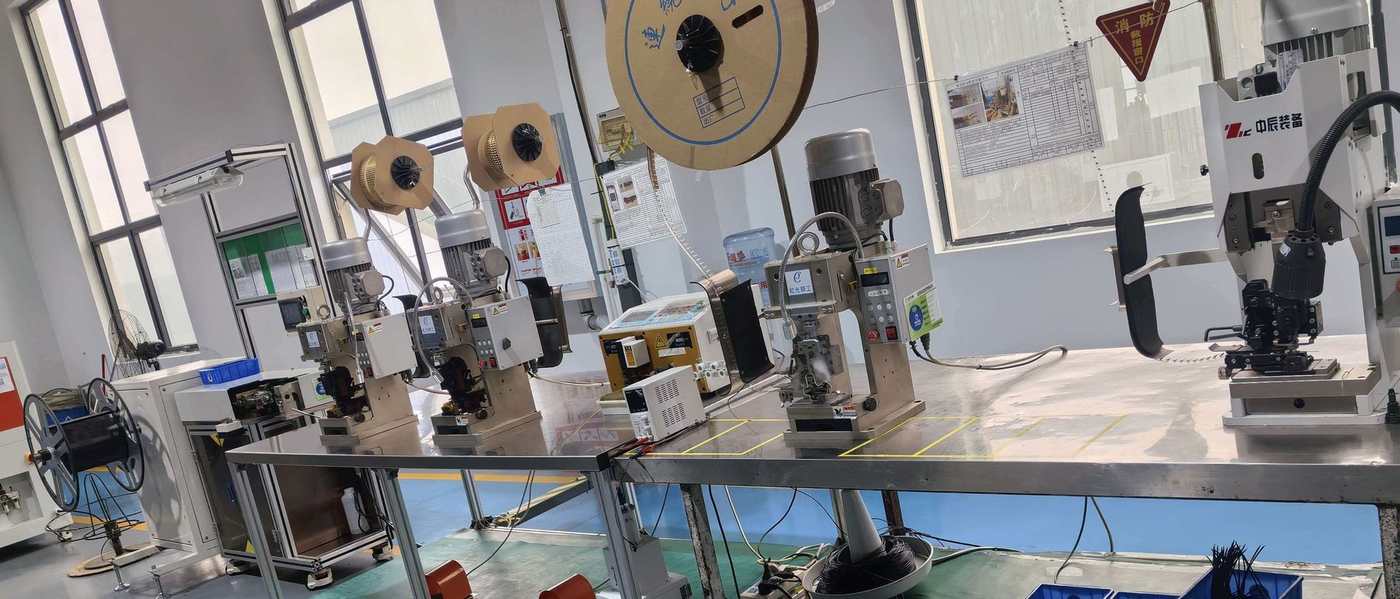
We have a full in-house testing laboratory with professional burst, tensile, airtightness and current testing equipment and dedicated inspectors, plus dimensional and visual inspection and temperature/media resistance testing. Test data can be supplied with the goods on request.
Yes. For standard items we provide batch-level factory inspection records; for nominated programmes we can submit a PPAP package (process flow diagram, control plan, MSA, process capability studies, etc.) and support customer audits.
Three gates: IQC for incoming materials (verifying material certificates and key performance indicators), IPQC in-process patrol inspection (first article and key characteristics), and OQC final inspection (airtightness, burst and other performance tests per the sampling plan, plus labelling and packaging checks).
Cooperation & delivery
It depends on the product. Standard items have a low MOQ, so you can start with a small trial order; custom parts involve tooling investment, so a first-order quantity and development lead time are usually agreed. Tell us your required volume in an enquiry and we will advise.
A drawing, 3D model or physical sample is enough for evaluation. Without a drawing, describing the vehicle/machine model, connection type, medium, temperature, pressure and annual volume still allows a preliminary quote. Standard items are answered within one working day.
Standard items in stock or short-lead products usually ship soon after order confirmation; custom parts enter volume production once tooling is complete. The exact lead time is confirmed with the quotation based on our production schedule.
Our products already ship in volume to Europe, the Americas, Russia and Southeast Asia, with English technical documentation and export-compliant packaging and customs paperwork. If the destination country requires certification for brake hoses (e.g. ECE type approval), please tell us during discussion and we will assess and support it.
After-sales & maintenance
Check regularly according to operating conditions and the manufacturer’s maintenance requirements. Replace promptly if the hose turns pale and hard, the surface cracks, fittings corrode, the crimp leaks, braking feels soft, or the air tank recharges frequently. For the replacement interval, refer to the vehicle maker’s maintenance manual.
Keep the defective part, packaging and batch information, contact us immediately and send photos or video. After verification we will replace the goods or take corrective action per the quality agreement, trace the same batch to find the cause and issue a conclusion.
Yes. We can provide technical notes covering routing, fixing-point spacing, minimum bend radius and interference avoidance; for volume programmes we can assign engineers to work with the OEM on assembly process validation.
Still have questions?
For technical questions, describing the operating conditions lets our engineers give a more accurate answer.
- National service hotline0719-8368587
- Email178423569@qq.com
Need a hose solution or custom development?
Tell us your vehicle model, operating conditions and annual volume — we will reply with a selection and quotation proposal within one working day.